Hello World
OVERVIEW
Project Quantum - reimagining Wipro's internal processes for 170,000+ people).
Conceptualization
Design
Usability testing
Dev handoff
Through decades of organic growth and aggressive acquisitions, the company’s internal operations had become a tangled web of legacy systems.
I stepped in alongside a core team of service and business leads to tackle "Project Quantum", a massive, human-centered initiative aimed at completely reimagining Wipro’s internal processes from the ground up.
Impact
Understanding the space
We audited an enterprise ecosystem that was buckling under its own weight. The design process was implemented in three phases.
Discover. Define. Design
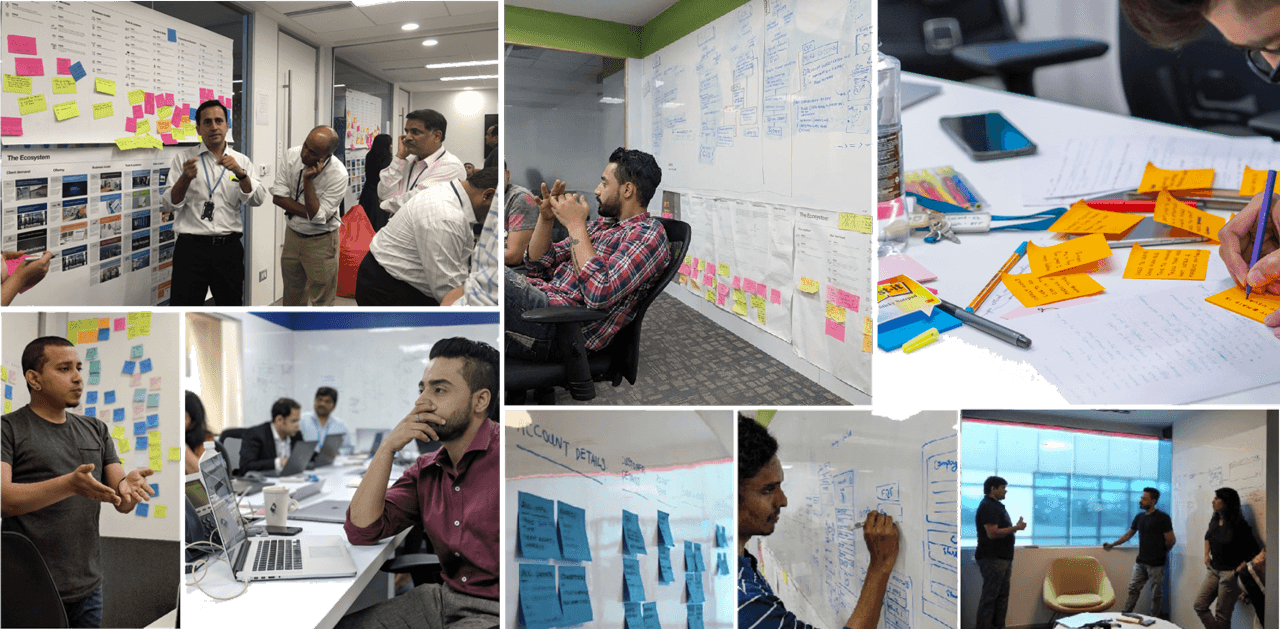
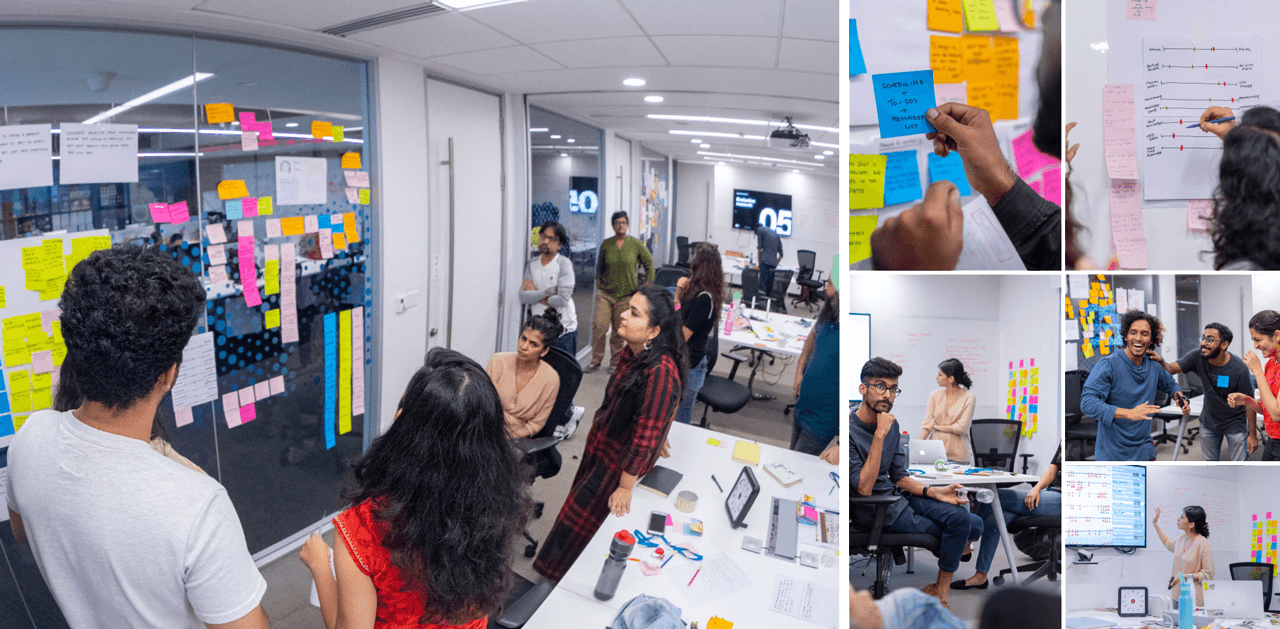
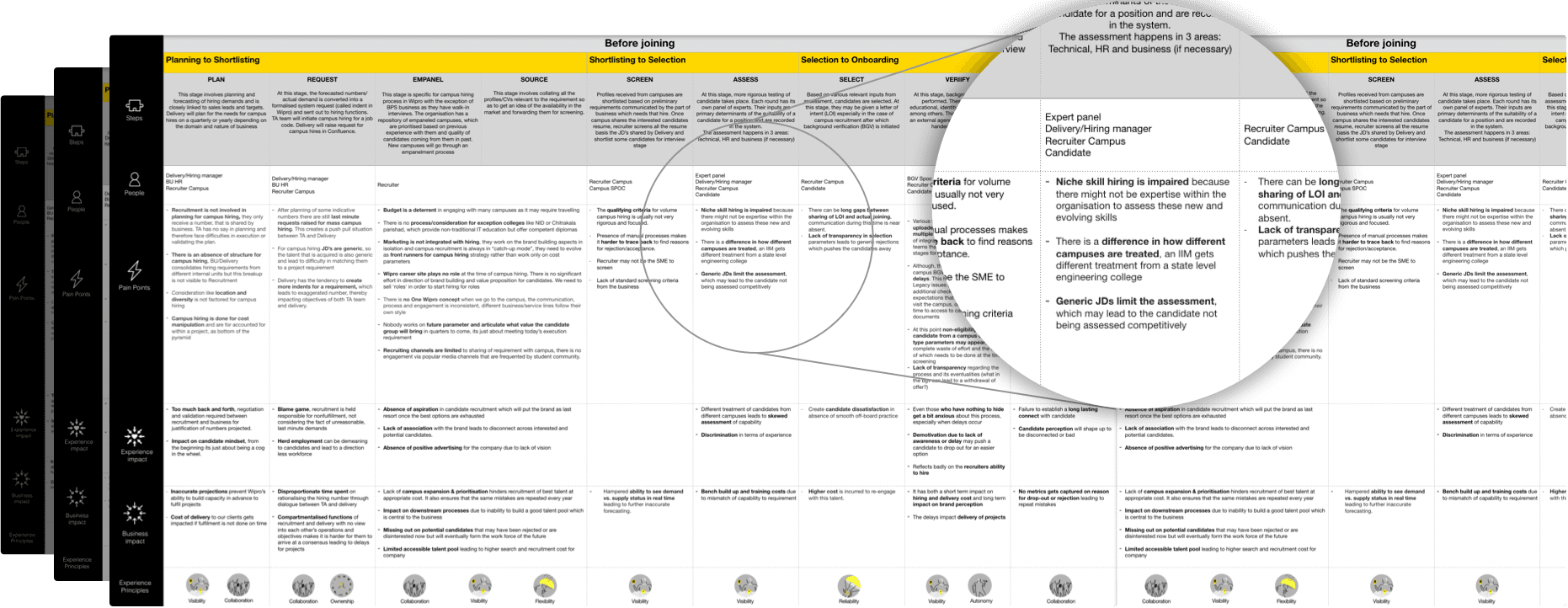
We created service journeys, identified & prioritised roles & their service interactions across process clusters. The journeys were validated with stakeholders through multiple co-ideation workshops. The validated service blueprints were used as input for business process finalisation & UX design.
The friction was everywhere. Employees were battling disparate sources of information, redundant tools, and a siloed mentality that killed initiative.
Wipro didn't just need a new coat of paint; they needed an entirely new operational nervous system.


Current journey maps illustrate user activities and touchpoints with pain-points identified at each step and its impact on people, business and experience.
Define
We mapped and validated every service journey through stakeholder workshops - turning abstract strategy into the concrete blueprints that drove all final business and UX decisions.


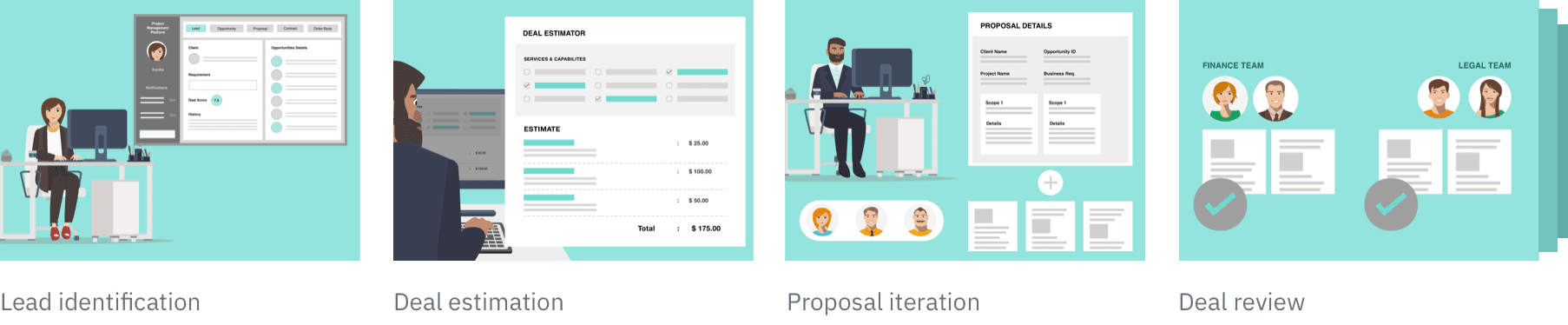
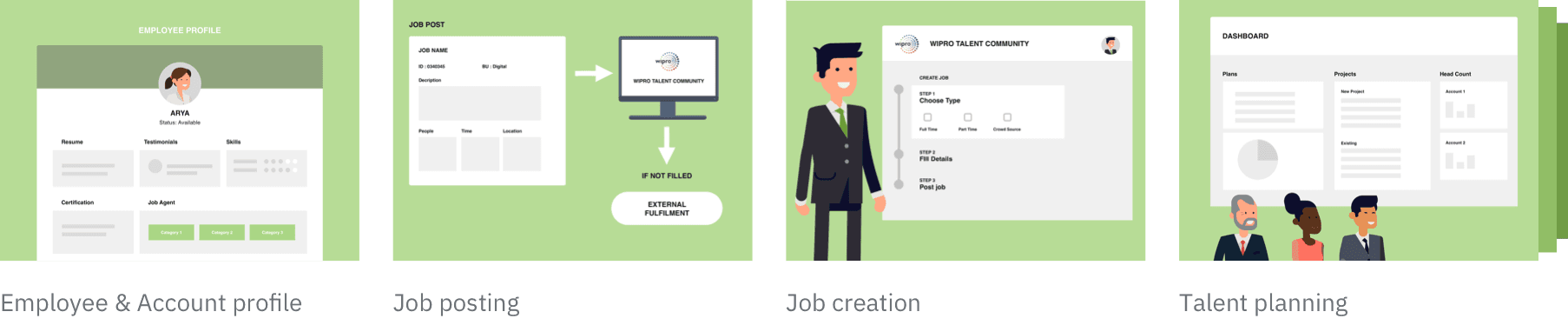
The sales cycle inclusive of initial engagement with customers showcasing core business offerings that generate leads for which proposals are created.
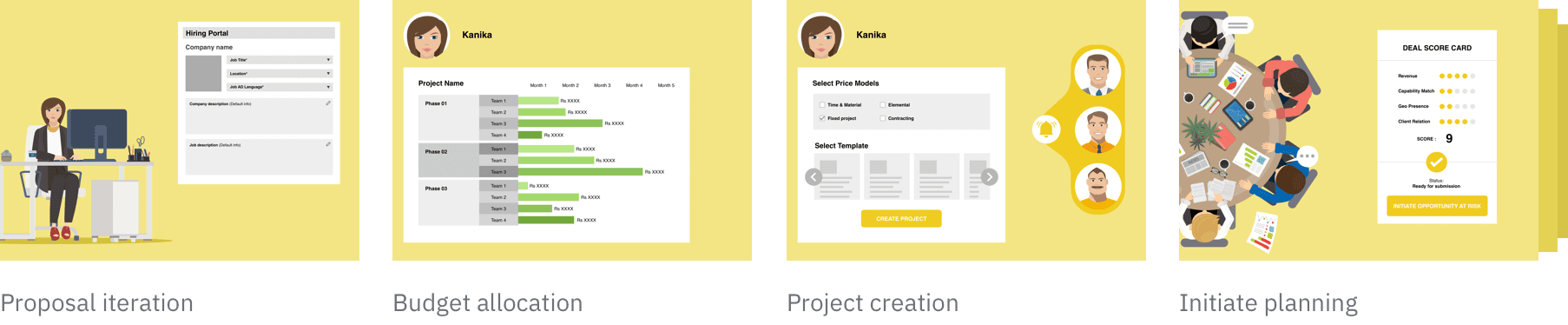
The process where a captured order gets translated into a project with a defined scope of work. Project teams are on-boarded, budgets are allocated, & delivery is kickstarted. Post the project deliverables, invoicing is done for revenue recognition.
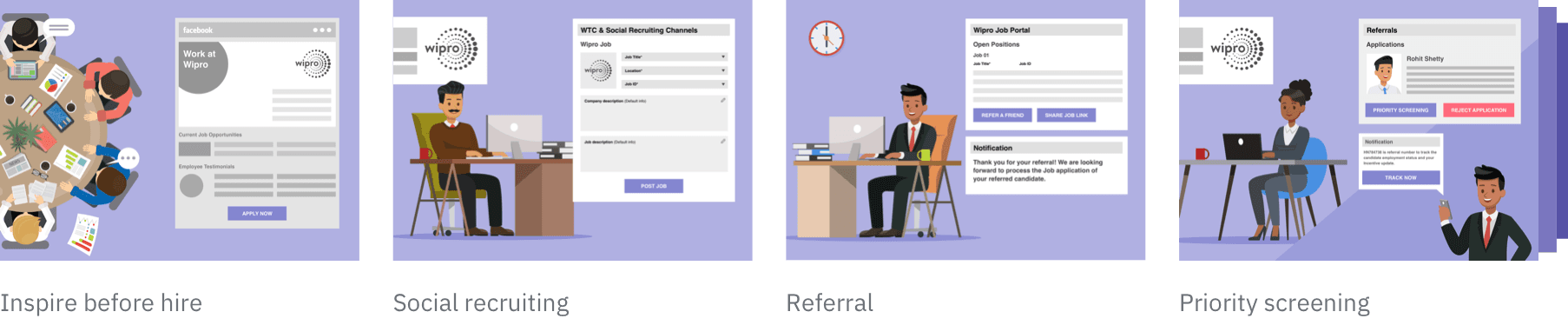
The lifecycle of an employee from the time they first engage with Wipro to the time they retire, while adopting and propagating Wipro's culture and working with cross functional teams & domains leading to a progressive growth path.
Onboarding the right people at the right time in projects that ensures good delivery, client engagement and employee satisfaction.
Design phase
To make this zero-to-one leap, we introduced "Wipro One"—a single, omnichannel enterprise system.
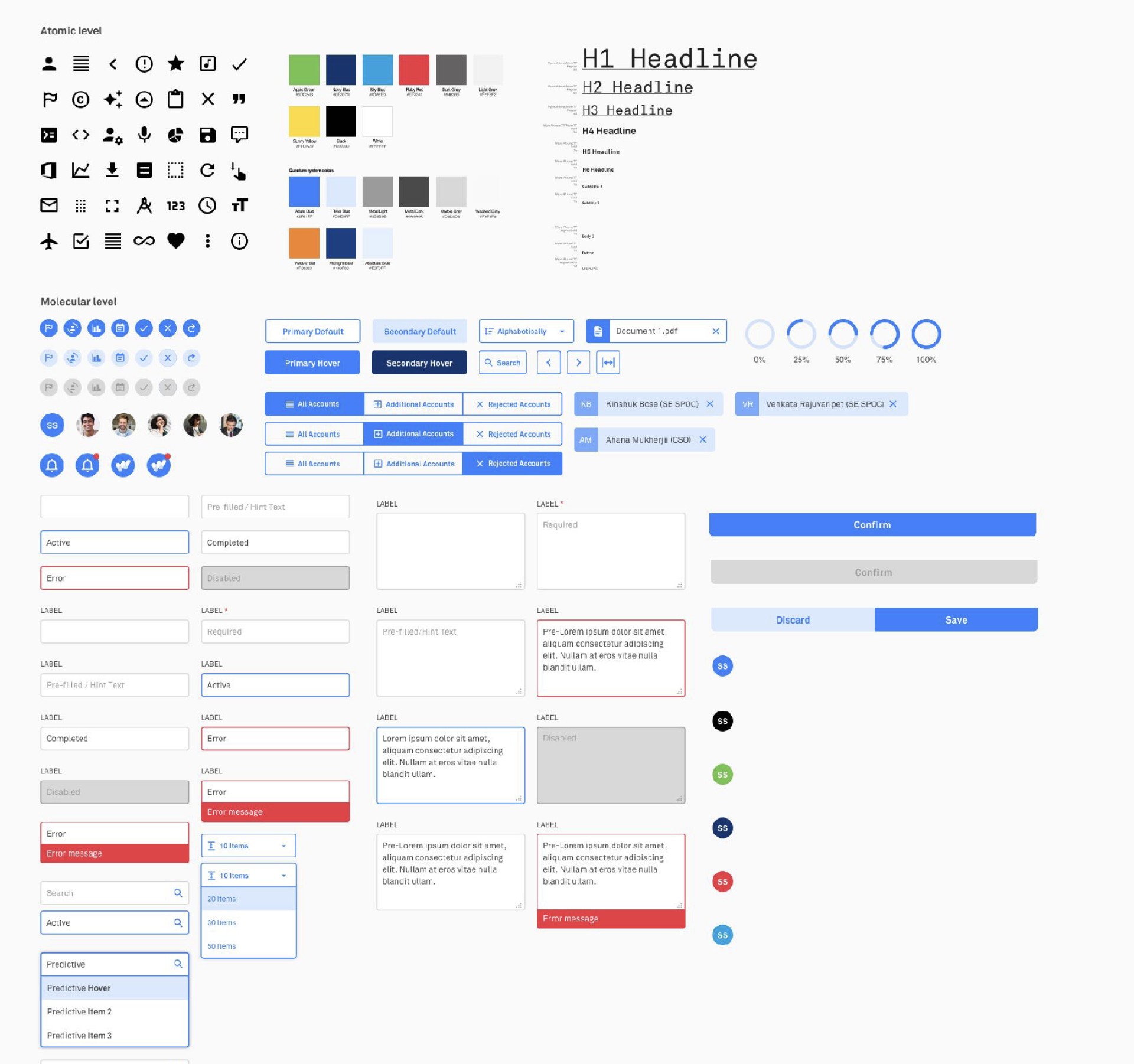
I defined the Quantum design style and built a scalable atomic library of 200+ plug-and-play components to ensure rapid, consistent handoffs.
Over five months, I translated complex future-state journeys into over 250 high-fidelity screens for the L2O MVP.
But I didn't stop at layout, I integrated a machine-learning digital assistant to provide contextual insights and real-time collaboration, effectively killing the need for offline follow-ups.
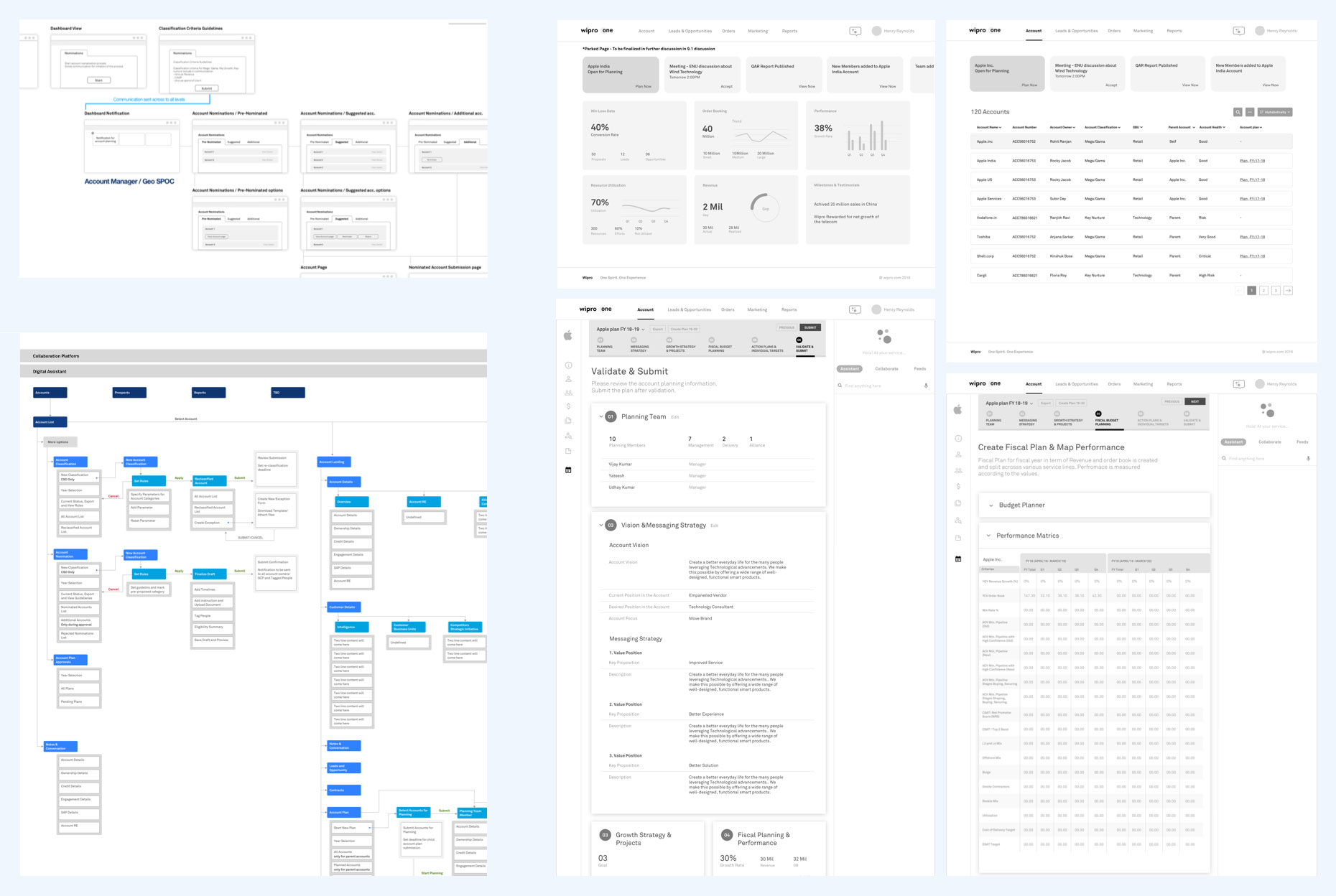
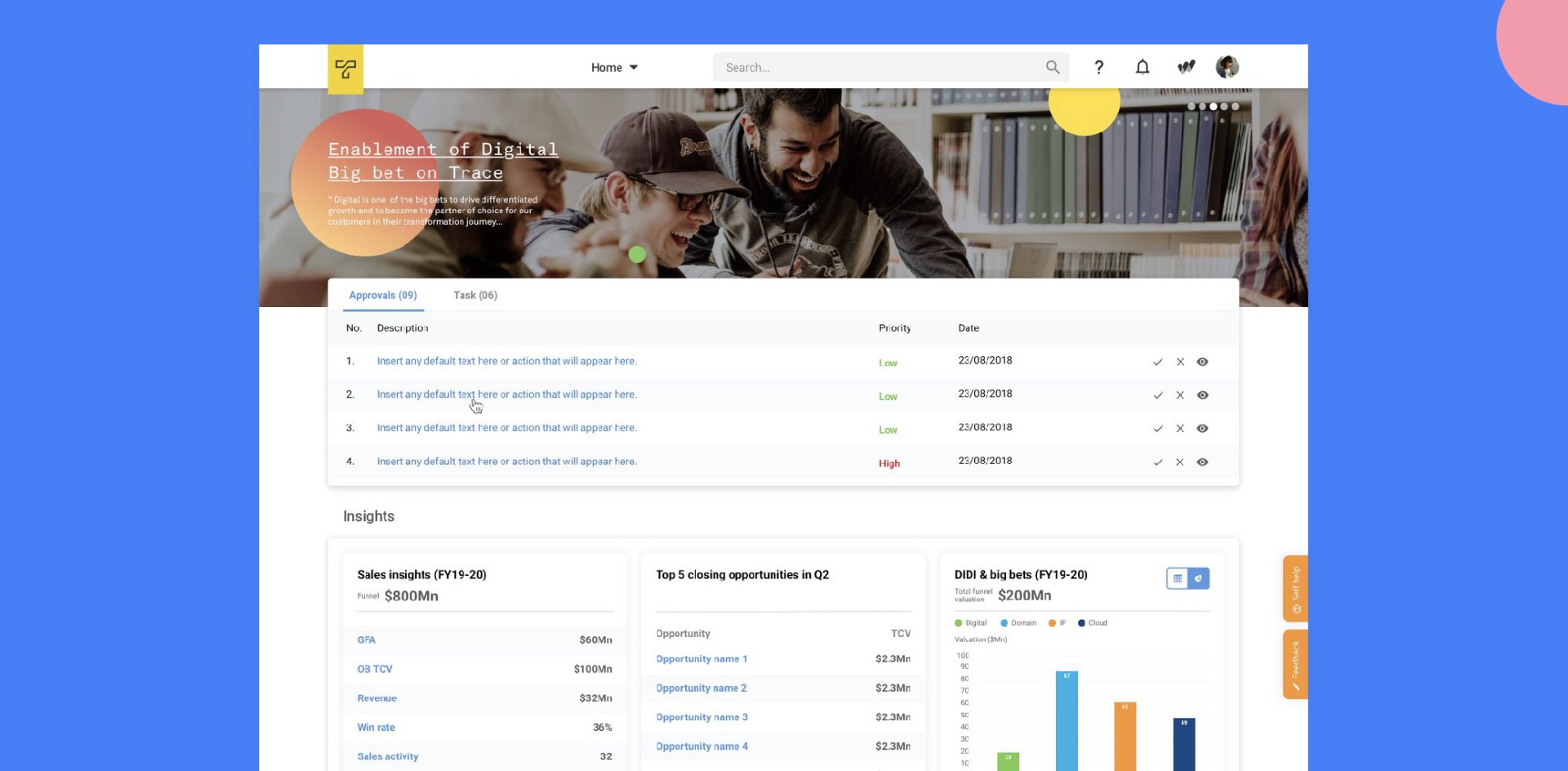
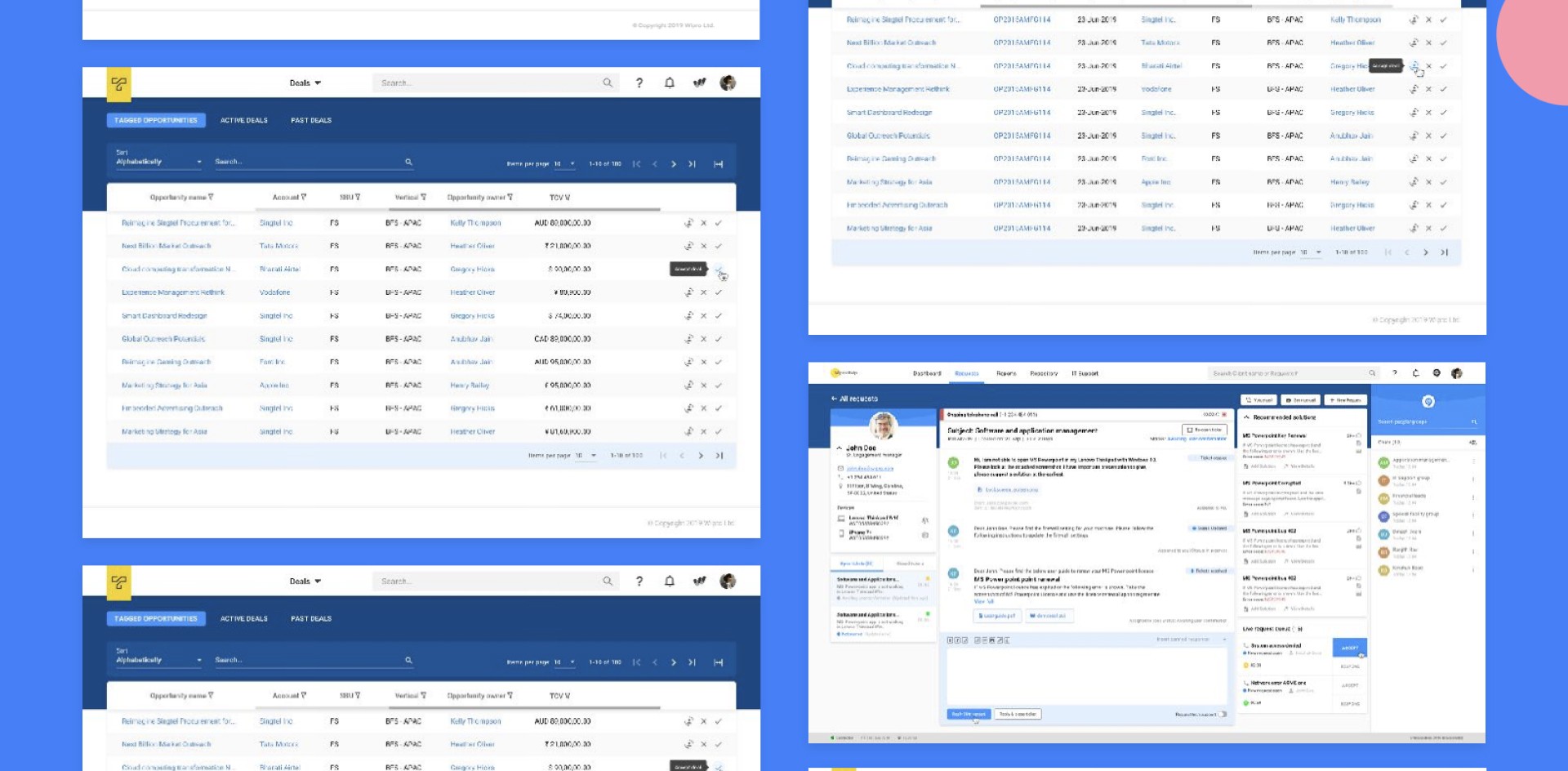
The L2O process screens are meant for Sales and Marketing pipelines, showing examples of Business accounts (clients accounts and leads).
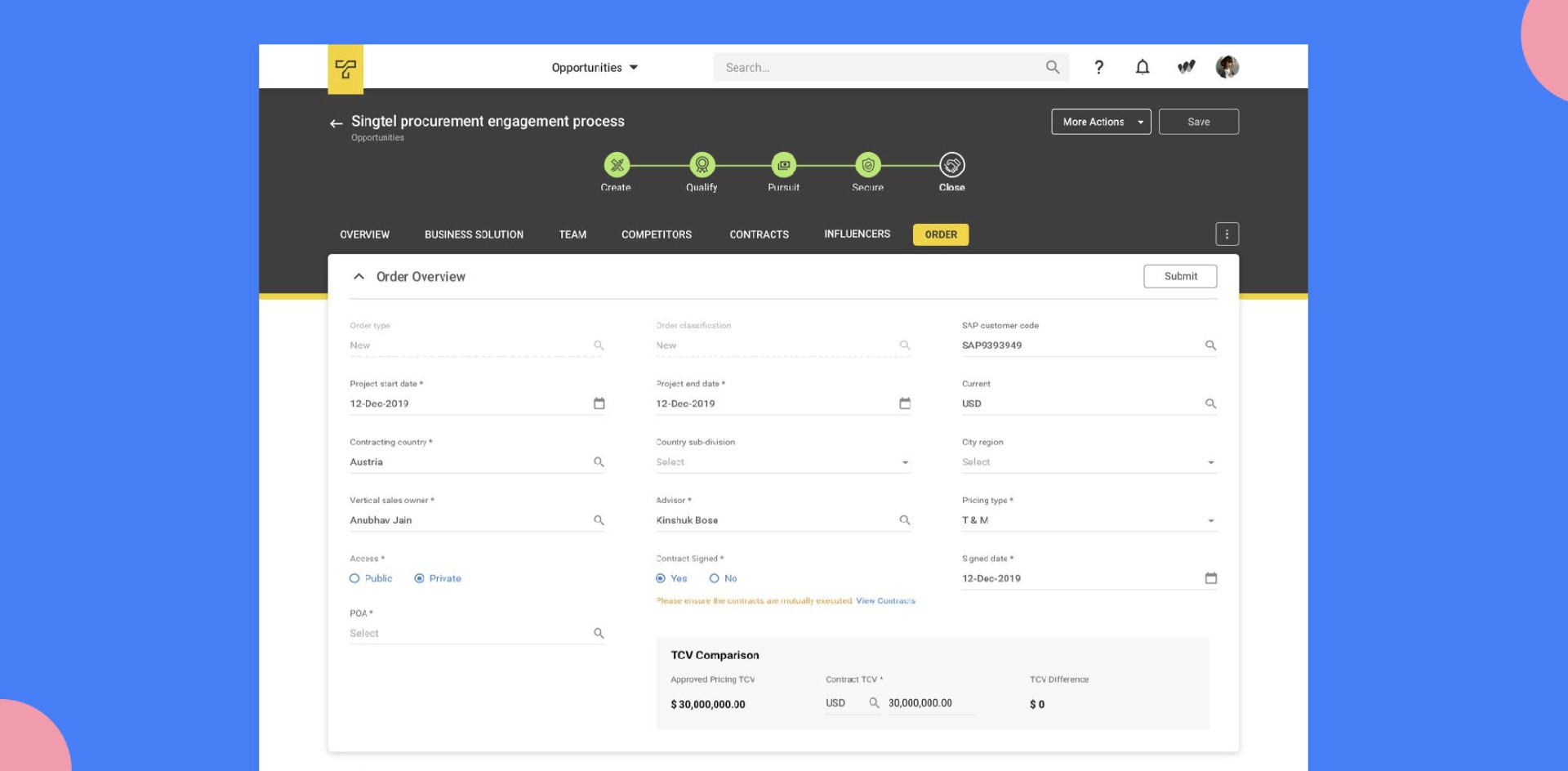
We unified all aspects from sales to delivery with role-based access for users to perform their tasks efficiently.
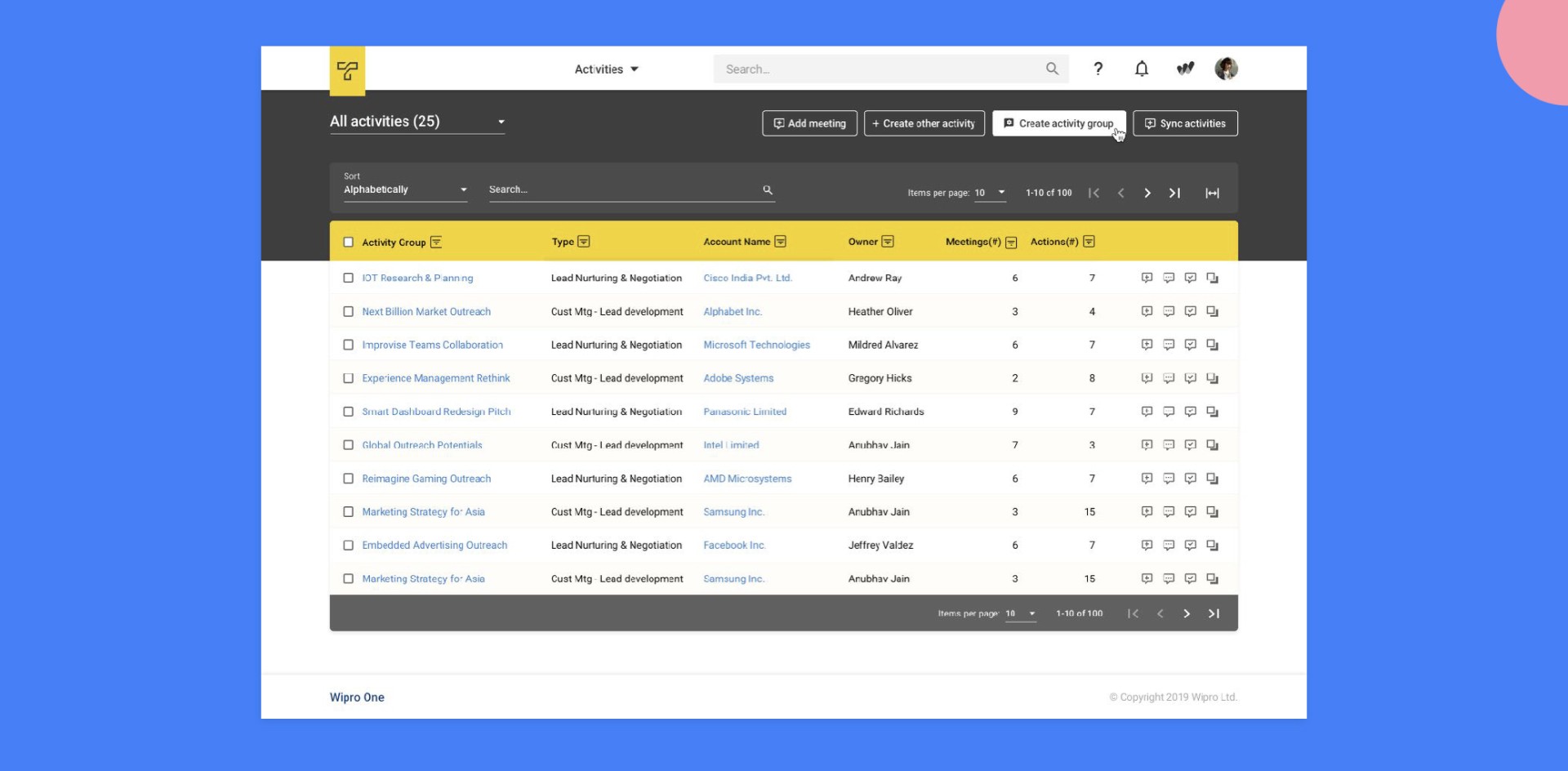
We used Use of data visualization components like dashboards, summary cards, calendars, etc., to give the user an accessible and contextual summary of information.
Integrated a learning model-based assistant that provided contextual insights as well as help & support to make informed decisions. This also doubles as a collaboration tool allowing users to internally message other employees.
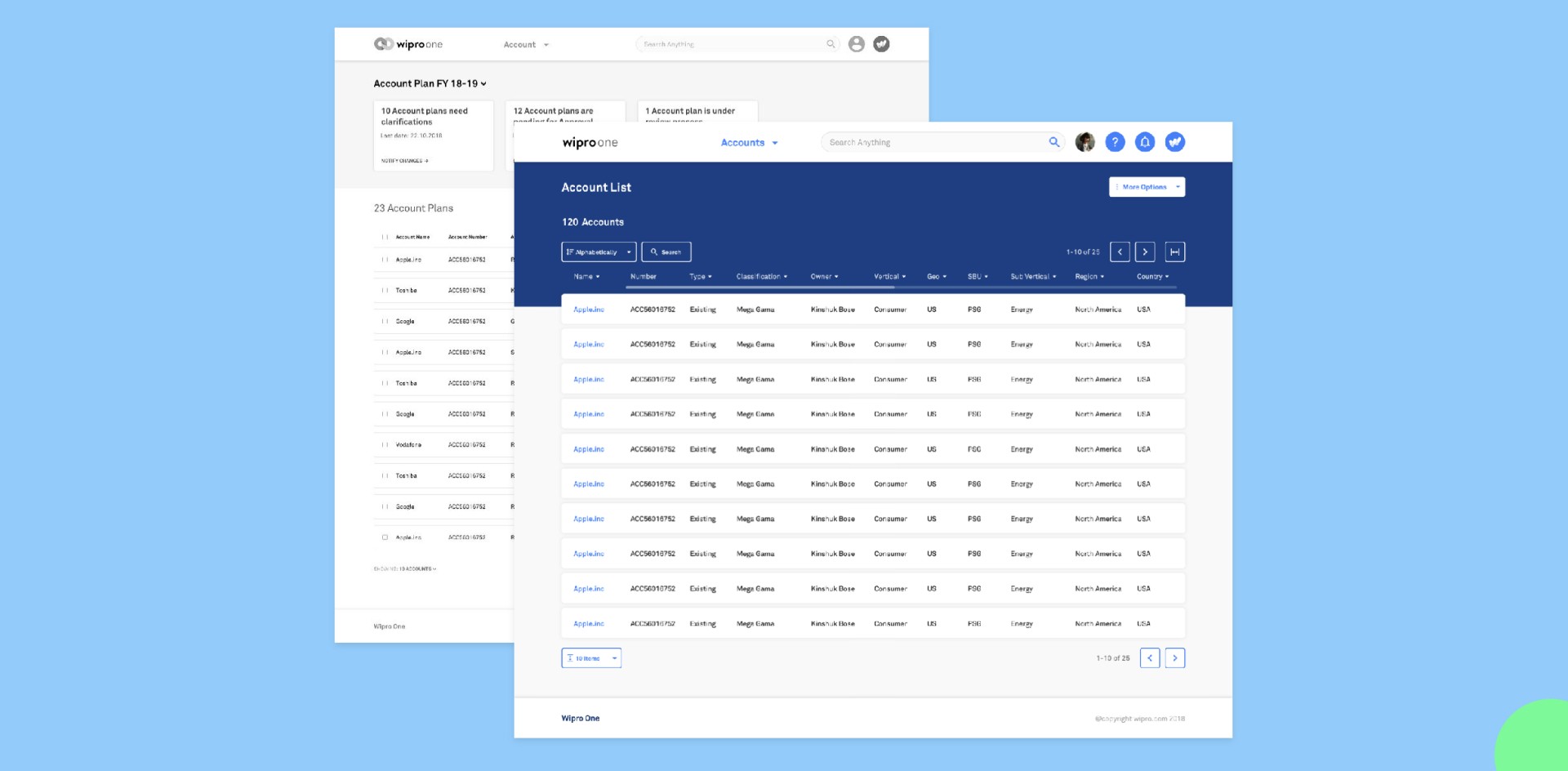
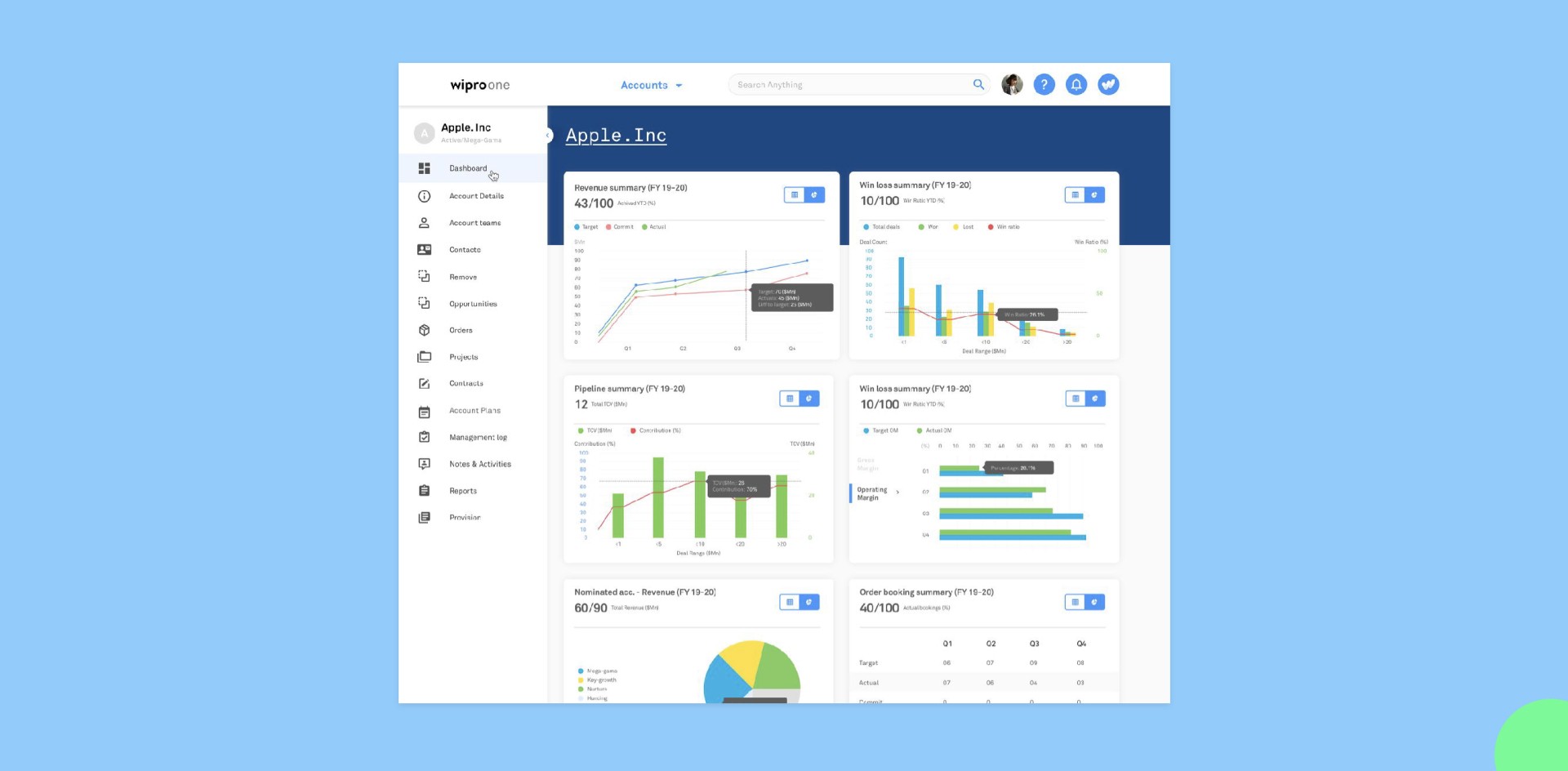
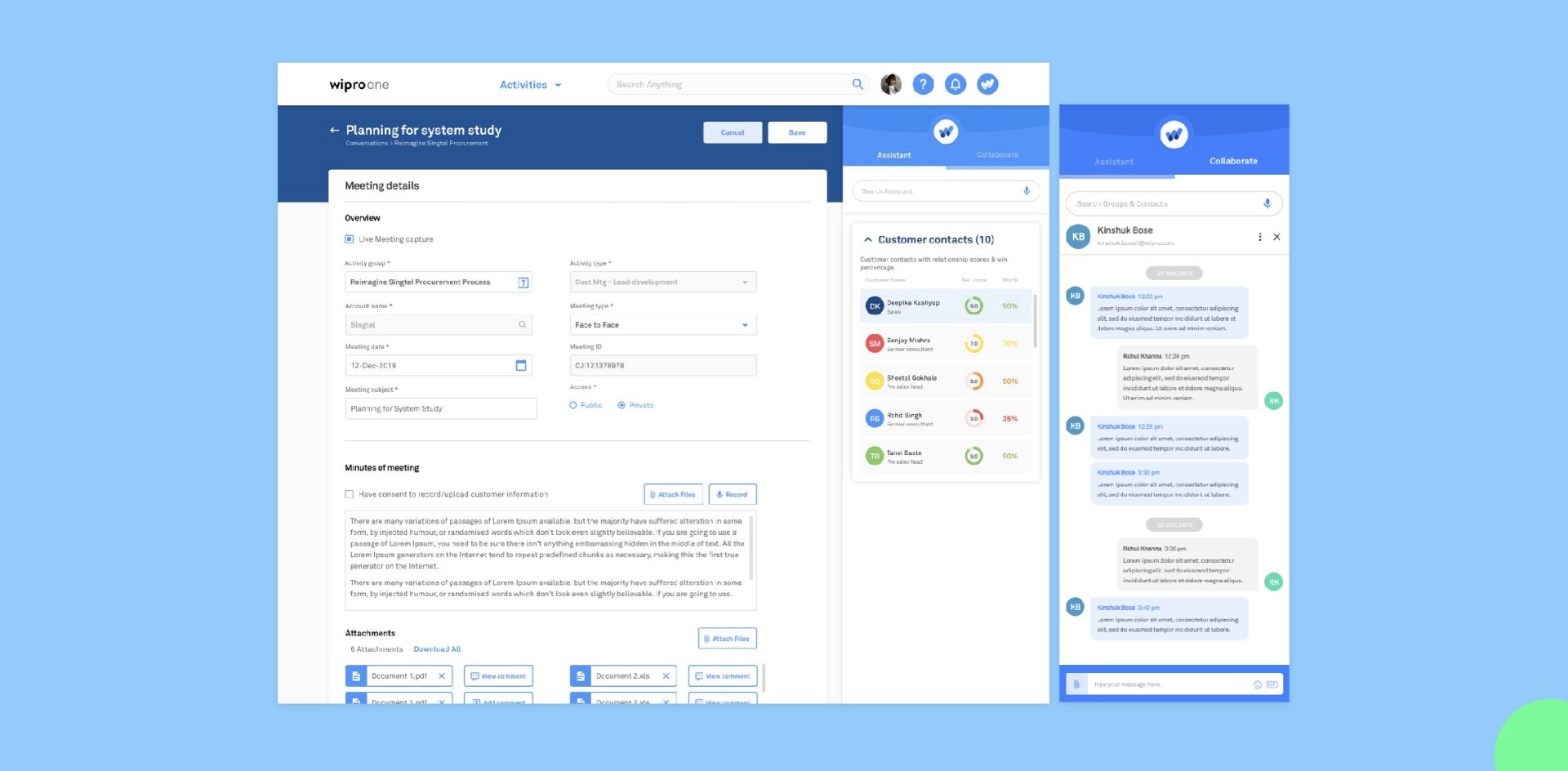
After the initial MVP version was in the testing stage, worked towards refining the design framework and making the system more efficient in terms of space optimization, object placement, and visual appeal based on the feedback we got from key stakeholders and users of the version 0.1.
We designed Version 0.2 to be 30% more space efficient, have improved legibility, better layout of components, and overall look more visually upgraded than the last version, while keeping the core functionality and need for backend binding changes to a minimum
Conclusion
The true success of Project Quantum was taking decades of enterprise friction and making it invisible. We didn't just build a better tool; we broke down operational silos, aligned a fragmented organization, and delivered an ecosystem that finally gets out of the user's way so they can just do their best work.